570.373.3000
 Kulpmont, PA



Moving to a new home changes more than an address. For someone living with dementia, it can also mean unfamiliar rooms, different routines, new people, new sounds, and fewer of the environmental cues that once helped daily life feel recognizable.
The impact of moving someone with dementia varies from person to person. A change in surroundings may contribute to increased confusion, agitation, anxiety, changes in sleep, or difficulty following familiar routines. Other people may show fewer noticeable changes or adjust more gradually.
Research examining the health effects of relocation for people living with dementia has found that moving can be associated with physical, psychological, behavioral, and functional effects, with relocation-related stress appearing across the evidence reviewed.
For families, the goal is not to predict exactly how a loved one will respond. It is to understand why unfamiliar surroundings can be challenging, preserve useful sources of familiarity, and pay attention to how the person adjusts over time.
Key Takeaway: Moving can disrupt the familiar surroundings and routines a person with dementia relies on. Familiar belongings, consistent routines, calm communication, and time to become accustomed to the new environment may help create a greater sense of continuity.
How Can Moving Affect Someone Living With Dementia?
A new environment can require a person with dementia to process many changes at once.
Things that once happened almost automatically may suddenly require more effort. The bedroom may be in a different location. The bathroom may look unfamiliar. Meal times, lighting, sounds, daily activities, and the people nearby may all change.
When familiar cues disappear, a person may have more difficulty understanding where they are or what is happening. Guidance about dementia caregiving notes that leaving familiar surroundings may increase agitation and confusion.
Families may notice changes such as:
- Increased confusion or disorientation
- Anxiety, restlessness, or agitation
- Asking repeatedly to go home
- Searching for familiar rooms, belongings, or people
- Changes in sleep or nighttime behavior
- Withdrawal or reduced interest in usual activities
- Changes in appetite
- Difficulty following routines that were previously familiar
- A greater need for reassurance
These reactions are possibilities, not guarantees. Dementia affects people differently, and a person’s response to relocation can depend on many factors, including their health, cognitive changes, environment, routines, and the amount of change happening around them.
It is also important not to assume that every new behavior after a move is caused by relocation. Sudden or significant changes can have other causes and may require medical attention.
Why Familiarity Matters During a Change in Surroundings
Familiarity can reduce the amount of new information a person must interpret.
A familiar chair, family photograph, blanket, piece of artwork, song, or daily routine may seem small, but recognizable details can provide continuity when the larger environment has changed.
Guidance on creating dementia-friendly surroundings emphasizes the value of familiar possessions, recognizable spaces, meaningful activities, and environments that are easier to understand.
Families can think about familiarity in several ways.
Familiar objects can make a new room more recognizable
Meaningful belongings may help a new bedroom or living area feel less unfamiliar. These might include photographs, favorite artwork, a familiar bedspread, a preferred chair, or other objects the person regularly sees and uses.
The goal is not to fill the space with everything from the previous home. Too much visual information can sometimes make an environment harder to navigate. Instead, focus on belongings that are recognizable and personally meaningful.
Familiar routines can provide predictability
A person may not always remember why a move happened, but familiar patterns can still provide structure.
Keeping ordinary parts of the day reasonably consistent—such as waking, meals, favorite activities, music, family contact, or bedtime routines—can make the new environment easier to experience.
Familiar people can provide continuity
Regular contact with trusted family members or other familiar people may also provide reassurance during a period when many other things have changed.
Consistency matters more than repeatedly explaining or testing whether the person remembers the move.
How Should Families Communicate About an Upcoming Move?
Communication around a move should match the person’s ability to understand and process information.
Long explanations may create more confusion rather than more clarity. In many situations, brief and reassuring communication is easier to follow.
Families may find it helpful to:
- Use short, clear sentences.
- Introduce information gradually rather than providing many details at once.
- Speak in a calm, respectful tone.
- Give the person time to respond.
- Avoid arguing when their understanding of the situation differs from yours.
- Acknowledge concerns without repeatedly correcting details.
- Focus on what is happening now and what comes next.
- Include the person in appropriate choices when they are able to participate.
For example, deciding which photographs to display or which familiar blanket to bring into a new room can provide involvement without requiring the person to manage every detail of the relocation.
Communication should also remain flexible. What works well for one person may frustrate or overwhelm another.
What Families May Notice During the Adjustment Period
Adjustment to a new environment is not necessarily immediate or linear.
A person may appear comfortable at one time and confused later. They may begin recognizing one part of the environment while continuing to struggle with another. Some routines may become familiar sooner than others.
During this period, families might notice repeated questions such as “When are we going home?” or attempts to find a former bedroom, doorway, or familiar person. Changes in mood, sleep, appetite, activity, or willingness to participate may also occur.
Rather than measuring adjustment against a fixed timeline, look for patterns.
Useful questions include:
- Is the person beginning to recognize certain spaces or routines?
- Are periods of distress becoming more or less frequent?
- Do familiar activities still hold their attention?
- Are eating and sleeping patterns changing significantly?
- Are there particular times, places, or situations that seem more confusing?
- What appears to provide comfort or reassurance?
There is no single number of days or weeks that determines whether someone has “adjusted.” The transition into long-term care can represent a significant change, and each person’s experience should be considered individually.
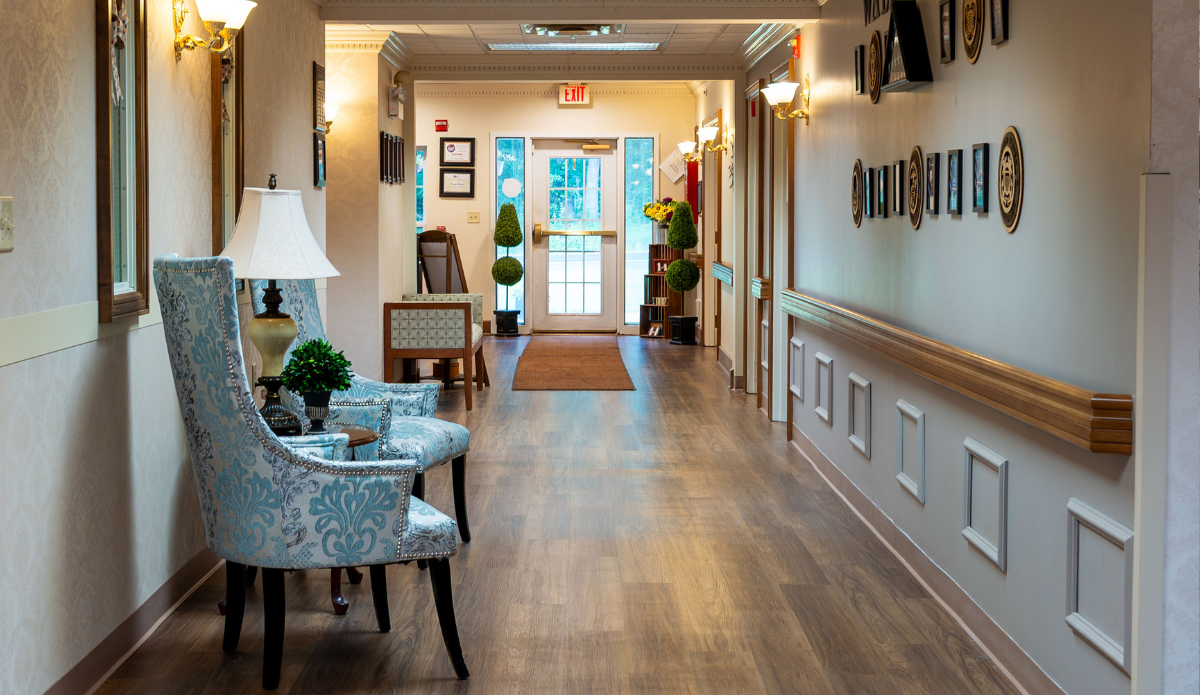
What Can Help a New Place Feel More Familiar?
Supporting adjustment does not require recreating the former home exactly. The more practical goal is to preserve recognizable parts of daily life where possible.
Consider the person’s established preferences and routines.
Keep meaningful belongings visible
Choose objects the person recognizes and regularly uses. Photographs, favorite blankets, artwork, familiar furniture, books, or keepsakes can help provide continuity.
Preserve useful routines
If someone has always listened to music after breakfast, watched a favorite program in the afternoon, or followed a familiar bedtime pattern, maintaining parts of those routines may help the new day feel more predictable.
Maintain regular family contact
Visits, phone calls, shared music, photographs, or familiar activities can help maintain connection. The right frequency and length will depend on the person.
Share important preferences
When someone moves into a care community, sharing information about routines, interests, communication preferences, favorite activities, and other meaningful parts of daily life can help caregivers understand the person beyond the diagnosis.
Introduce new experiences at a manageable pace
A completely new environment already provides a great deal of information to process. When possible, allow time for the person to become familiar with important spaces and routines rather than expecting immediate comfort with everything at once.
The emphasis should remain on continuity and adjustment—not on completing a perfect transition checklist.
When a Change Deserves More Attention
Not every change after relocation should be attributed to the move.
If a person becomes suddenly much more confused, experiences a major change in behavior, stops eating or drinking adequately, has significant difficulty sleeping, develops mobility problems, appears ill, or experiences another concerning change, contact an appropriate healthcare professional.
A physician or care team can help determine whether a change may be related to an illness, medication, pain, dehydration, infection, or another health issue rather than assuming it is simply part of adjusting to new surroundings.
This distinction matters because someone living with dementia may not always be able to describe discomfort or explain what is wrong.
Supporting Adjustment Without Expecting It to Happen Overnight
Moving someone with dementia can change many familiar reference points at once. Adjustment is therefore better understood as a process than as a single moment when the move is complete.
Families can support that process by preserving meaningful routines, using recognizable belongings, communicating simply, observing patterns, and allowing the person time to become familiar with the new environment.
For someone moving into memory care, the surroundings are only one part of that adjustment. Daily routines, activities, social spaces, and the people providing support also become part of the new pattern of everyday life.
Families considering senior living in Kulpmont can learn more about Memory Care and Personal Care at Serenity Gardens. For additional community-specific context, explore what daily life in Memory Care can look like at Serenity Gardens.
If your family has questions about Memory Care or how Serenity Gardens may fit your loved one’s needs, contact Serenity Gardens to start a conversation.
Frequently Asked Questions
How can moving affect someone living with dementia?
Moving may increase confusion, anxiety, agitation, or difficulty following familiar routines because the person is adapting to new surroundings and fewer recognizable environmental cues. Responses vary, so families should observe the individual rather than expect a specific reaction.
How can families prepare for a change in surroundings?
Families can focus on preserving continuity rather than trying to eliminate every change. Familiar belongings, recognizable routines, simple communication, and consistent family contact may help the new environment feel less unfamiliar.
What familiar belongings may support the transition?
Personally meaningful and recognizable belongings may be helpful, such as photographs, artwork, a favorite blanket, familiar furniture, books, keepsakes, or items connected to established hobbies and routines. Choose items based on what is meaningful to the individual rather than trying to reproduce the previous home exactly.
How should families communicate about an upcoming move?
Use simple, calm language and avoid overwhelming the person with too many details at once. Give them time to respond, acknowledge concerns, avoid unnecessary arguments about facts, and involve them in appropriate choices when possible.
What can families expect during the adjustment period?
Adjustment can vary considerably. Someone may have periods of confusion or ask to return home while gradually becoming more familiar with new rooms, people, and routines. There is no universal timeline, so focus on the person’s patterns, comfort, health, and functioning rather than expecting adjustment by a specific date.
I can’t say enough about Serenity, their caring staff and residents! For three years my father called Serenity “home” and has made many lifelong friends! It was during the last few months that I realized just how much the administrators and caregivers go out of their way for their patients! Thank God for Serenity Gardens!!
Dianne Wrobel